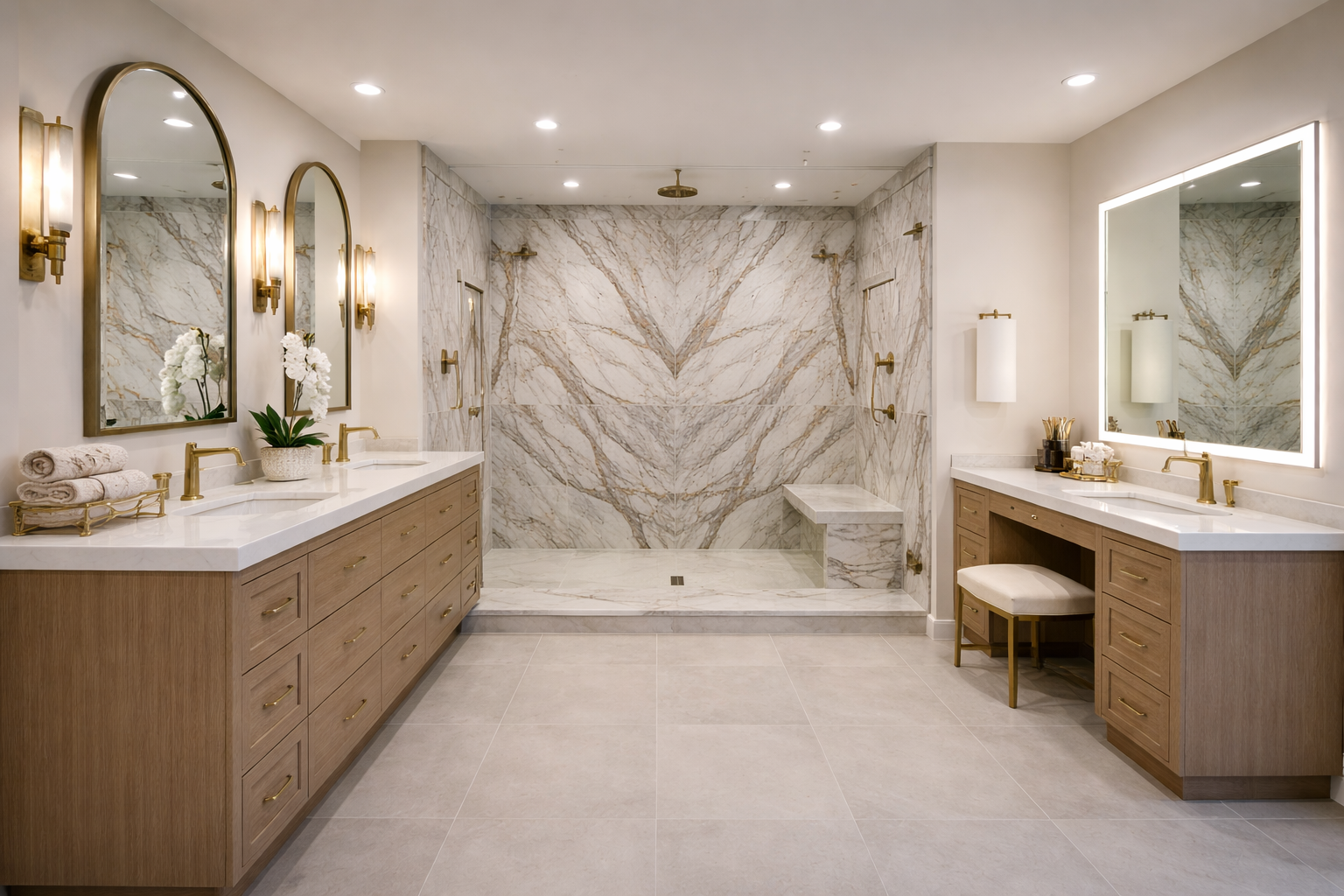
The most common question we get from Chandler homeowners isn't "can you do a bathroom remodel?" — it's "what's it actually going to cost?" And it's a fair question, because the range is wide. A basic guest bath refresh runs $6,000–$10,000. A full primary suite gut remodel with a steam shower and custom tile can hit $55,000 or more. The difference isn't contractor markup — it's scope, materials, and what your home's plumbing decides to reveal once walls come open.
This guide breaks down real costs for bathroom remodeling in Chandler, the permit process, how long projects take, and the questions we hear most often from homeowners who've been researching online and aren't sure what to believe.
The Short Answer: Chandler Bathroom Remodel Cost Ranges in 2026
Here's an honest snapshot of what different bathroom scopes cost in Chandler right now. These are ranges from real projects — not national averages adjusted for Arizona:
- Powder room / half bath refresh: $3,500–$7,000 — new vanity, toilet, light fixture, mirror, and paint. No tile work, no plumbing moves.
- Guest bath cosmetic update: $6,000–$12,000 — new vanity, toilet, basic tile surround update, fixtures, and lighting. Existing layout stays.
- Guest bath full gut remodel: $12,000–$22,000 — everything comes out: tile, tub/shower, vanity, toilet, fixtures. New layout, new waterproofing, new finishes throughout.
- Primary bath mid-range remodel: $22,000–$40,000 — frameless glass shower, new tile, double vanity, updated fixtures, heated floors optional. No major plumbing relocation.
- Primary bath luxury gut remodel: $40,000–$65,000+ — full gut, large-format stone tile, freestanding soaking tub, steam generator, custom cabinetry, heated floors, backlit mirrors.
- Tub-to-walk-in shower conversion: $8,000–$18,000 — depends heavily on tile selection and glass enclosure complexity.
The national "average bathroom remodel cost" figure you'll see on home improvement sites — often cited around $12,000–$15,000 — lands somewhere in the middle of the guest bath range. It doesn't describe what most Chandler homeowners are actually doing when they call us.
What Actually Drives the Cost
Three things move the number more than anything else:
1. Tile Selection
Tile is the biggest single cost variable in a bathroom remodel. A builder-grade 4×4 ceramic tile and a large-format 24×48 Italian porcelain can vary by $4–$18 per square foot in material cost alone — and that difference multiplies across every wall surface in a shower. In a primary bath with a large walk-in shower, tile selection alone can swing the budget by $8,000–$15,000.
Natural stone (marble, travertine, quartzite) adds material cost but also significantly increases labor time — stone requires more careful layout, sealing, and ongoing maintenance. Most Chandler homeowners land on high-quality porcelain with a stone look: similar aesthetics, lower cost, more durable in a bathroom environment.
2. Plumbing Moves
If your remodel keeps the plumbing where it is, you're in good shape. The moment you move a toilet, relocate a shower drain, or add a second sink where the plumbing doesn't already exist, costs escalate — especially in a slab foundation home. Moving a drain in a slab means cutting concrete, relocating the pipe, and patching the concrete back. That work alone runs $1,500–$4,000+ depending on how far the drain moves and what the slab reveals.
Most Chandler homes are slab-on-grade, so this comes up often. The good news: most remodels don't require major plumbing moves. A tub-to-shower conversion typically uses the existing drain location. A vanity upgrade usually uses the existing supply lines. The problem is you don't always know what the plumbing looks like until you open the walls.
3. Existing Conditions
Bathrooms hide things. Old tile set on a mud bed (common in 1990s–early 2000s Chandler construction) is heavier and more work to demo than modern tile on cement board. Improper previous waterproofing leads to moisture damage in the subfloor or wall studs that has to be remediated before new tile goes in. Galvanized supply lines that are 20+ years old may need replacement while the walls are open. These aren't surprises we manufacture — they're what the building actually contains, and they show up in the work.
A well-written estimate builds in some contingency for unknowns. Be skeptical of very low bids that don't acknowledge the possibility of existing conditions. Those projects tend to generate a lot of change orders.
Do You Need a Permit for a Bathroom Remodel in Chandler?
This is one of the most searched questions for bathroom remodels, and the answer is: it depends on what you're doing.
You typically do not need a permit for: cosmetic work only — replacing a vanity, toilet, fixtures, mirror, paint, or light fixtures where no electrical panel work is involved.
You typically do need a permit for: any work that moves or adds plumbing (new drain or supply locations), modifies or adds electrical circuits (adding outlets, GFCI, exhaust fan on a new circuit), structural changes, or changes to the shower's waterproof assembly. Full gut remodels almost always require a permit.
Chandler Development Services handles residential permit review. A straightforward bathroom permit in Chandler typically runs 2–3 weeks for plan review. We pull permits on every project that requires them — it's not optional, and it protects the homeowner at resale and insurance time. Unpermitted work in a bathroom is one of the first things buyers' inspectors flag.
How Long Does a Bathroom Remodel Take?
One of the top questions on every home improvement forum: "how long will I be without my bathroom?" Here's the real timeline by scope:
- Cosmetic refresh (no permit): 3–7 days. New vanity, toilet, fixtures, mirror. Minimal disruption.
- Guest bath gut remodel: 2–3 weeks of active construction after permit approval. You'll be without that bathroom for the duration.
- Primary bath full gut remodel: 3–5 weeks of active construction. This is the scope that most disrupts daily life.
- Luxury primary with custom tile and steam: 5–7 weeks. Complex tile layouts, steam system installation, and frameless glass templating (which happens after tile is complete, adding 2–3 weeks for fabrication) extend the timeline.
Note: these are construction timelines after permit approval. Add permit lead time — 2–3 weeks for most Chandler bathroom projects — to get the full schedule from contract signing to project completion.
The other timeline factor people underestimate: material lead times. Custom tile from a specialty supplier can take 4–6 weeks to arrive. Freestanding tubs from higher-end manufacturers: 3–8 weeks. Frameless glass: 2–3 weeks after template. If you're targeting a specific completion date, material selections need to be made and orders placed well before construction starts. We manage this for every project.
"The projects that run long are almost always the ones where the homeowner is still deciding on tile when we're ready to set it. Lock in your selections before demo day, and the schedule stays clean."
Can You Live in Your House During a Bathroom Remodel?
Yes, in most cases — with one important qualification: you need another functioning bathroom to use. If you're remodeling your only bathroom, you'll need a plan (staying with family, a short-term rental nearby, a gym membership for showers). We've had clients in all of these situations and can help think through the logistics.
For a primary bath remodel in a home with a second bath, daily life is disrupted but manageable. Dust, noise during work hours, and occasional water shutoffs are the main inconveniences. We hang plastic dust barriers between the work area and living areas, and we schedule any water shut-offs for the morning so lines are restored by end of day.
Walk-In Shower vs. Keeping the Tub: What Should You Do?
This comes up on nearly every primary bathroom project we touch in Chandler. The conventional wisdom — "keep a tub if you have kids, remove it if you don't" — is an oversimplification. Here's a more useful framework:
- If it's your only tub in the house: think carefully before removing it. Families with young children almost always want a tub. Resale data in suburban East Valley markets consistently shows that homes with zero bathtubs attract a narrower buyer pool — not disqualifying, but a consideration.
- If you have a second tub elsewhere: converting the primary bath tub to a walk-in shower is almost universally the right call. The space a walk-in shower occupies is more functional and more impressive to buyers than a tub most adults rarely use.
- The ROI on a walk-in conversion is strong. A well-done tub-to-shower conversion consistently shows up as one of the higher-return bathroom updates in Arizona appraisals — because the resulting shower feels like a real upgrade, not a compromise.
We've completed dozens of tub-to-shower conversions in Chandler and across the East Valley. Most are straightforward: the tub footprint becomes the shower, the drain stays in roughly the same location, and the shower pan is built to drain to it. See some of these projects in our bathroom portfolio.
Is a Bathroom Remodel Worth It? ROI in Chandler
The ROI on a bathroom remodel in Chandler depends heavily on your home's price range and what you're starting from. Some honest guidance:
- In homes priced $400K–$600K: a mid-range primary bath remodel ($25,000–$35,000) typically returns 65–75% of cost at sale. Not a money-maker in the pure financial sense, but it reduces days-on-market and supports asking price better than most improvements.
- In homes priced $600K–$900K: the floor rises — buyers in this range expect updated bathrooms. A dated primary suite in an otherwise well-priced home actively suppresses offers. A $35,000–$50,000 remodel can return close to dollar-for-dollar in a competitive Chandler listing.
- Luxury finishes in a non-luxury home: this is where ROI breaks down. A $65,000 primary bath in a $450,000 home almost never returns its cost at sale — the market caps what the home can appraise for regardless of the tile. Build for the market your home is in.
The ROI conversation changes if you're remodeling to live in the home for another 10+ years. Daily quality of life in a well-built bathroom is real — the math is different when you factor in years of use rather than a one-time sale event. See our kitchen remodel cost guide for a similar breakdown on how to think about remodel ROI.
What Are the Hidden Costs?
We hear this question a lot — usually from homeowners who've been burned on a previous project. The things that legitimately add cost mid-project in a Chandler bathroom:
- Moisture or mold remediation. Found behind the old tile in maybe 15–20% of the gut remodels we do. Usually contained and addressable quickly — but it's real work that takes time and money.
- Subfloor damage. Soft spots under old tile or around the toilet base often indicate water damage that's worked its way into the plywood subfloor. The floor needs to be solid before new tile goes in.
- Older plumbing condition. Galvanized steel supply lines in homes from the 1980s and early 1990s often have significant corrosion and reduced flow. We recommend replacing them while walls are already open rather than capping them back.
- Electrical upgrades. Chandler (and Arizona generally) requires GFCI protection within 6 feet of any water source. Homes built before 1996 often don't have compliant GFCI protection in bathrooms. Adding it during a remodel is straightforward — but it's a permit item and goes in the scope.
- Glass lead times. Frameless glass is fabricated to order after tile is complete. The 2–3 week fabrication window is predictable and not "hidden" — but if it wasn't in your original schedule, it extends the project by weeks.
A good estimate doesn't pretend these don't exist. Ours includes a line-item note on what might be discovered and what it would cost to address, so you're not caught off guard if we find it.
How to Choose a Bathroom Remodeling Contractor in Chandler
A few things that actually matter when evaluating contractors for a bathroom remodel:
- License verification. Verify the contractor's license on the Arizona Registrar of Contractors website before signing anything. A KB-2 license covers residential general contracting including bathroom remodels. An unlicensed contractor doing bathroom work in Chandler is a liability risk to you as a homeowner — if something goes wrong, your recourse is limited.
- Ask who's actually doing the work. Some contractors run everything through subcontractors they've never worked with before. Ask whether they have a consistent tile setter and plumber they use regularly. Experienced subs who know the GC's standards produce better work.
- Get a written, itemized estimate. A two-line quote ("bathroom remodel, $22,000") doesn't tell you what's in scope. You want a breakdown: demo, waterproofing, tile (labor and material), shower glass, vanity, plumbing, electrical, and permit. This lets you compare bids accurately and understand what you're paying for.
- Check for permit history. You can look up a contractor's permit history with Chandler Development Services. A contractor who regularly pulls permits in Chandler has a documented track record. A contractor who never pulls permits is either doing cosmetic-only work or cutting corners.
- References from similar scope work. A contractor who does mostly new construction or commercial work isn't necessarily a good fit for a primary bath gut remodel. Ask for references from bathroom projects specifically, not just "remodeling" broadly.
A Note on Chandler Specifically
Chandler's housing stock spans a wide range — from 1980s tract homes in established neighborhoods near downtown to newer construction in the Ocotillo and Fulton Ranch communities, to higher-end custom homes in gated communities around the Price Corridor. The bathroom in a 1990 Chandler home and the bathroom in a 2015 Chandler home present very different starting points for a remodel, and the price to bring them to the same end state reflects that.
Older Chandler homes frequently have 5×8 or smaller bathroom footprints, galvanized plumbing, and original tile set on mud beds — all of which add cost and time to a full gut. Newer Chandler homes often have better bones but more generic builder finishes that homeowners want to upgrade to match the quality level of the rest of the home.
We do bathroom remodeling throughout Chandler and the broader East Valley. The estimate is always free, and we'll tell you upfront what we find in the walls rather than hitting you with change orders mid-project.