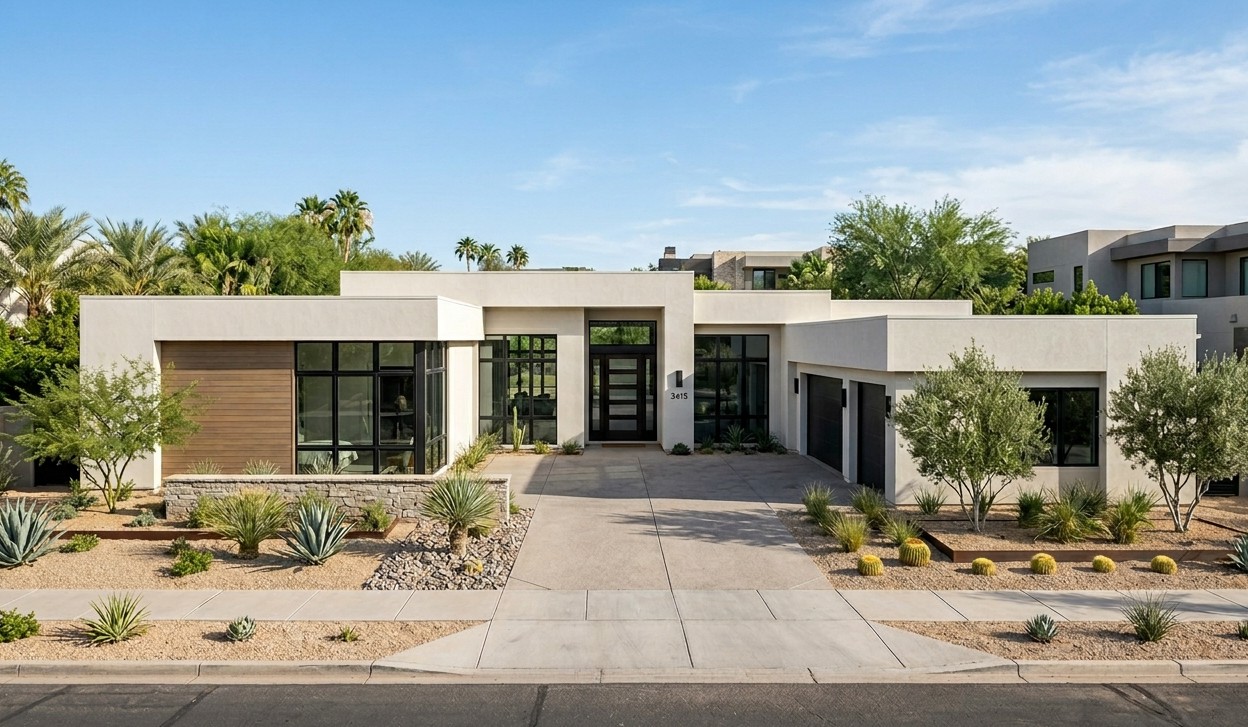
Phoenix has been a fixer-upper market for years. Neighborhoods like Arcadia, Midtown, Encanto, and the Camelback corridor are full of 1950s–1980s ranch homes that buyers are purchasing specifically to renovate — either to live in long-term or to flip. The question we hear constantly: "What's it actually going to cost to bring this thing into the 21st century?"
The answer is never simple, but it's also not a mystery. Here's how we price whole home renovations on older Phoenix properties, with real numbers from real projects — not the watered-down national averages you find on home improvement websites.
Why Phoenix Older Homes Are a Category of Their Own
A 1965 Phoenix ranch home isn't the same renovation challenge as a 1965 home in Chicago or Seattle. Arizona's climate, building practices of the era, and how these homes have been maintained (and sometimes neglected) create specific conditions that affect both cost and scope:
- Aluminum wiring. Homes built in Phoenix from the mid-1960s through the mid-1970s were often wired with aluminum branch circuit wiring rather than copper. Aluminum wiring isn't dangerous on its own, but it requires special attention: connections need anti-oxidant compound, and any renovation involving new outlets or fixtures needs to address the terminations properly. A full rewire in a 1,500–2,000 sq ft home runs $8,000–$18,000. Partial remediation (pigtailing) runs $2,500–$5,000 but doesn't eliminate all concerns.
- Cast iron or galvanized plumbing. Drain lines in older Phoenix homes are cast iron (pre-1975) or early ABS plastic. Supply lines are often galvanized steel, which corrodes from the inside and restricts flow over time. A full repipe on an older Phoenix home — supply and drain — runs $6,000–$14,000 depending on size and accessibility.
- Flat or low-slope roofs. Mid-century Phoenix construction leaned heavily on flat and low-slope roofs. They're functional and architecturally distinctive, but they require specific maintenance and fail differently than pitched roofs. If a renovation involves opening ceilings or adding HVAC, the roof condition becomes part of the conversation.
- No attic insulation or undersized HVAC. Homes built before Arizona adopted modern energy codes are often under-insulated or have original HVAC equipment running on oversized ductwork. In Phoenix's climate, replacing a 30-year-old HVAC system and adding proper attic insulation during a renovation isn't optional — it's what makes the home livable and efficient.
- Slab foundations. Nearly every Phoenix home from this era is slab-on-grade. Moving plumbing — adding a wet bar, relocating a bathroom, extending a kitchen — means cutting concrete. That adds $1,500–$4,500+ to any scope that changes the drain location.
None of these are deal-breakers. They're just what the building contains, and they have to be priced accurately up front — which is why a detailed walkthrough and a written estimate matter more on an older Phoenix home than almost anywhere else.
Cost Ranges: What Does a Phoenix Home Renovation Actually Cost?
Renovation costs scale with two things: how much of the house you're touching, and how deep you go in each area. Here are the honest ranges for Phoenix in 2026:
Cosmetic Refresh — $25,000 to $55,000
Paint throughout, new flooring, updated fixtures and hardware, new interior doors, refreshed landscaping, exterior paint. No structural changes, no major systems work. This is the scope that makes an older home feel updated without addressing anything behind the walls. It's the right move if the systems are in good shape and you're optimizing for livability or quick resale appeal.
The risk: cosmetic work on a home with aging electrical or plumbing can mask problems that show up later — or at inspection. A pre-renovation systems assessment ($300–$500 with a licensed plumber and electrician) is worth it before committing to a cosmetic-only scope.
Single-System Gut (Kitchen or Bathrooms) — $18,000 to $65,000
Taking one kitchen or one to two bathrooms down to the studs while leaving the rest of the house cosmetically updated is a common scope for Phoenix buyers who want to prioritize the highest-impact spaces. See our detailed breakdowns of kitchen remodel costs in the East Valley and bathroom remodel costs in Chandler — the ranges apply to Phoenix as well, with the caveat that older Phoenix homes often add plumbing and electrical work to what would otherwise be a simpler job.
If your scope is a kitchen-or-bathroom-only path, you can build a free Cosmo Project Brief in about 90 seconds for a quick range estimate before we walk the space.
Partial Whole Home — $60,000 to $130,000
Kitchen gut, two bathroom remodels, new flooring throughout, updated electrical panel (100A to 200A), new HVAC, and cosmetic refresh on the remaining rooms. This is the most common scope we see on Phoenix homes in the $450,000–$650,000 purchase range where the buyer has a clear improvement budget and wants to address both the livability and systems in one pass.
Sequencing matters at this scope. Electrical panel upgrades and any plumbing work happen before drywall closes. HVAC is coordinated with insulation and ceiling work. Flooring goes in last. Getting the sequence right saves money — doing it out of order creates rework.
Full Gut Renovation — $120,000 to $250,000+
Everything comes out. Walls to studs, new insulation, new electrical throughout, full repipe, new HVAC, new windows, new kitchen, new bathrooms, new flooring, and structural changes if the layout is being opened up. This is the scope that turns a tired 1970s ranch into a home that competes with new construction — and it's increasingly common in Arcadia, Midtown, and the Biltmore area where lot values justify the investment.
On a 1,800–2,200 sq ft Phoenix home, a comprehensive gut renovation typically runs $130–$180/sq ft finished. On homes with significant layout changes, premium finishes, or structural work, costs can reach $200–$250/sq ft. That puts a full renovation on a 2,000 sq ft home in the $260,000–$400,000 range for the build alone — separate from the purchase price.
"The projects that surprise homeowners are the ones where they budgeted for a partial renovation and then found the electrical or plumbing in worse condition than expected. We've opened walls in Phoenix homes and found conditions that effectively required a gut decision. Know what you're buying before you close."
Neighborhoods and What They Mean for Your Budget
Phoenix isn't uniform. The neighborhood your home is in shapes both what you should spend and what you can expect to get back:
- Arcadia and Arcadia Lite. The highest-value renovation market in Phoenix proper. Lot values justify aggressive renovation budgets — full gut remodels in Arcadia routinely run $200,000–$400,000 on the build side, with finished homes appraising at $800/sq ft+ in prime blocks. If you're buying here to renovate, don't under-build. The neighborhood supports the investment.
- Midtown and the Camelback Corridor. Strong appreciation, mix of older condo buildings and mid-century single-family. Kitchen and bathroom upgrades return well here. Full gut remodels are happening but are less common than partial renovations — buyers often pick up the remaining upside themselves after purchase.
- Encanto and Willo Historic District. Historic homes require additional care around exterior alterations — some are subject to historic preservation review. Interior renovations are less restricted, but exterior changes need to be appropriate to the era. Check with the City of Phoenix Historic Preservation Office before planning any exterior scope.
- South Phoenix and Laveen. Lower price points mean renovation budgets need to stay disciplined. Cosmetic refreshes and single-system gut remodels typically make sense. Full gut renovations are harder to justify purely on ROI — though buyers who plan to hold the home long-term do them regularly for the quality-of-life benefit.
- Deer Valley, Moon Valley, Paradise Valley adjunct neighborhoods. Large ranch homes on bigger lots, often built 1975–1990. These homes have more square footage and often outdated but structurally sound bones. Kitchen and primary bath remodels have strong ROI here.
Do You Need a Permit for a Home Renovation in Phoenix?
For anything beyond purely cosmetic work — new paint, flooring, fixtures — yes. The City of Phoenix Development Services handles residential permit review. Here's the general breakdown:
- Permit required: any structural modifications (removing or adding walls, beam work), electrical panel upgrades, adding or moving circuits, plumbing changes (moving or adding drains and supply lines), new HVAC equipment or ductwork changes, window enlargements or new openings in exterior walls.
- Permit not required: like-for-like fixture replacements (same location, same specs), painting, flooring, cabinet replacement that doesn't involve electrical or plumbing changes, replacing doors and windows in existing openings of the same size.
Phoenix permit turnaround for a whole home renovation is typically 3–5 weeks for plan review on a complex project. Simple permits (single system, no structural) can be over-the-counter or near-immediate. We handle all permit coordination as part of project management — it's included in our scope, not billed as an add-on.
Unpermitted work is a growing liability for Phoenix homeowners. The City has increased inspection activity in renovation-heavy neighborhoods. More practically, unpermitted electrical and plumbing work is something every buyer's inspector looks for and every title company flags. It suppresses your sale price or kills deals. Don't skip it.
How to Sequence a Whole Home Renovation
One of the most common mistakes on full renovations is doing the work in the wrong order. Here's how we sequence a Phoenix whole home renovation:
- Demolition. Everything that's coming out goes first — demo to studs where walls are being opened, flooring removed, cabinets and fixtures out.
- Structural. Any beam work, wall removals, or load-bearing modifications happen before anything else goes in.
- Rough plumbing. New supply lines, drain relocations, and any underground work (slab cuts) happen while walls are open and floors are bare concrete.
- Rough electrical. Panel upgrade, new circuits, rough wiring for lighting, outlets, appliances, and HVAC.
- HVAC rough-in. Ductwork, air handler placement, and any attic work before insulation goes in.
- Insulation. Attic insulation and any wall insulation goes in after rough inspections pass.
- Drywall. Hang, tape, texture, and prime.
- Cabinets and tile. Kitchen cabinets first, then tile work in bathrooms and kitchen backsplash.
- Paint. Full interior paint after tile is grouted and cabinets are set.
- Finish plumbing and electrical. Fixtures, outlets, switches, lighting — all the finish work that goes in after paint.
- Flooring. Hard flooring (tile, LVP, hardwood) goes in last — after all trade work is complete and paint is done.
- Punch list. Appliance installation, hardware, touch-ups, and final inspections.
Out-of-sequence work is one of the primary causes of budget overruns on renovations. Flooring installed before plumbing is complete gets damaged. Drywall hung before rough inspections gets torn out. A detailed schedule maintained by the GC is what keeps the sequence clean.
Renovation vs. Buying New: How to Think About It
This is the question driving a lot of traffic to articles like this one. With new construction in the Phoenix metro running $350–$550/sq ft all-in (land, build, finishes) in most submarkets, and older Phoenix homes often available at $200–$300/sq ft before renovation, the math seems obvious. But it isn't always:
- When renovation wins: you want a specific location (Arcadia, Midtown, an established school district) where new construction isn't available. The lot is on a larger parcel or a more desirable street than new builds offer. You have time to manage the process and tolerance for a 6–9 month project.
- When new construction wins: you want known costs and a fixed timeline without hidden conditions. You want a warranty on systems and structure. You don't have the bandwidth to manage a renovation project while living elsewhere. New construction in outer Phoenix submarkets (Laveen, Deer Valley, Surprise-adjacent) is increasingly cost-competitive once you factor in renovation contingency on an older home.
- The break-even reality: a full gut renovation of an older Phoenix home, when you add purchase price + renovation cost + carrying costs during construction, often lands within 10–15% of new construction on a per-square-foot basis. The renovation wins on location and lot; new construction wins on certainty and speed.
What the Estimate Looks Like
A credible estimate for a whole home renovation in Phoenix isn't a single number. It's a line-by-line breakdown: demo, structural (if any), rough plumbing and electrical, HVAC, insulation, drywall, kitchen, bathrooms, painting, flooring, finish work, and permit fees. It should also include a contingency line — typically 8–12% on an older home — with a note on what it's there for.
It should tell you exactly what's in scope and what's explicitly excluded, so there are no arguments mid-project about whether something was "included." We provide written estimates within 7 days of a walkthrough, and we walk the space ourselves before writing a number.
We've renovated homes throughout Phoenix and the metro area — from cosmetic refreshes in South Mountain to full gut remodels in Arcadia. See examples of our work in the project gallery. If you're evaluating a Phoenix purchase or already own an older home and are building your renovation scope, the estimate is free and the call is worth having.